
Room to move,
speak, and eat.
If a tight band of tissue is making it hard to speak, eat, or keep your teeth aligned, a frenectomy is a quick, gentle release. Performed by Dr. Bradley, a UCLA-trained, surgically-proficient dentist.
- UCLA-trained dental surgeon
- Implants placed & restored in-house
- Most insurance accepted
- Monthly payment plans
- Se habla español
- Award-winning · West LA Dental Society
A small release with a big difference.
A frenectomy is a straightforward procedure that removes or reshapes a frenum — the small fold of tissue that connects parts of the mouth, like the tongue to the floor of the mouth or the upper lip to the gums. A lingual frenectomy releases a tongue-tie; a labial frenectomy adjusts the tissue between the upper lip and the gums.
What a frenectomy does for you.
Clearer speech
When restricted tissue interferes with pronunciation, releasing it gives the tongue and lip the freedom to form sounds clearly.
Easier eating
A tight lingual frenum can limit tongue movement; freeing it makes chewing and swallowing more comfortable.
Protected teeth & gums
An over-tight labial frenum can pull a gap between the front teeth or lead to gum recession — correcting it protects your alignment and gum health.
Signs a frenectomy could help.
Tongue-tie
A short or tight lingual frenum that restricts tongue movement, causing challenges with speech, eating, and swallowing.
Lip-tie
An overly tight or extended labial frenum that contributes to a gap between the front teeth, and even gum recession over time.
Speech difficulties
Trouble with pronunciation or limited tongue mobility that gets in the way of clear communication.
Eating challenges
Difficulty with certain foods, or discomfort while chewing or swallowing.
Orthodontic spacing
A prominent frenum that causes spacing between teeth, sometimes treated before or during orthodontic care.
Quick, gentle, and back to your day.
Careful evaluation
We assess your oral health and use imaging to pinpoint the exact location of the frenum and how much it’s restricting movement.
A precise release
The frenectomy itself is quick — often completed within minutes — with numbing and comfort options so the visit is easy.
Minimal downtime
Most patients return to normal activities the same day, with any mild soreness easily managed.
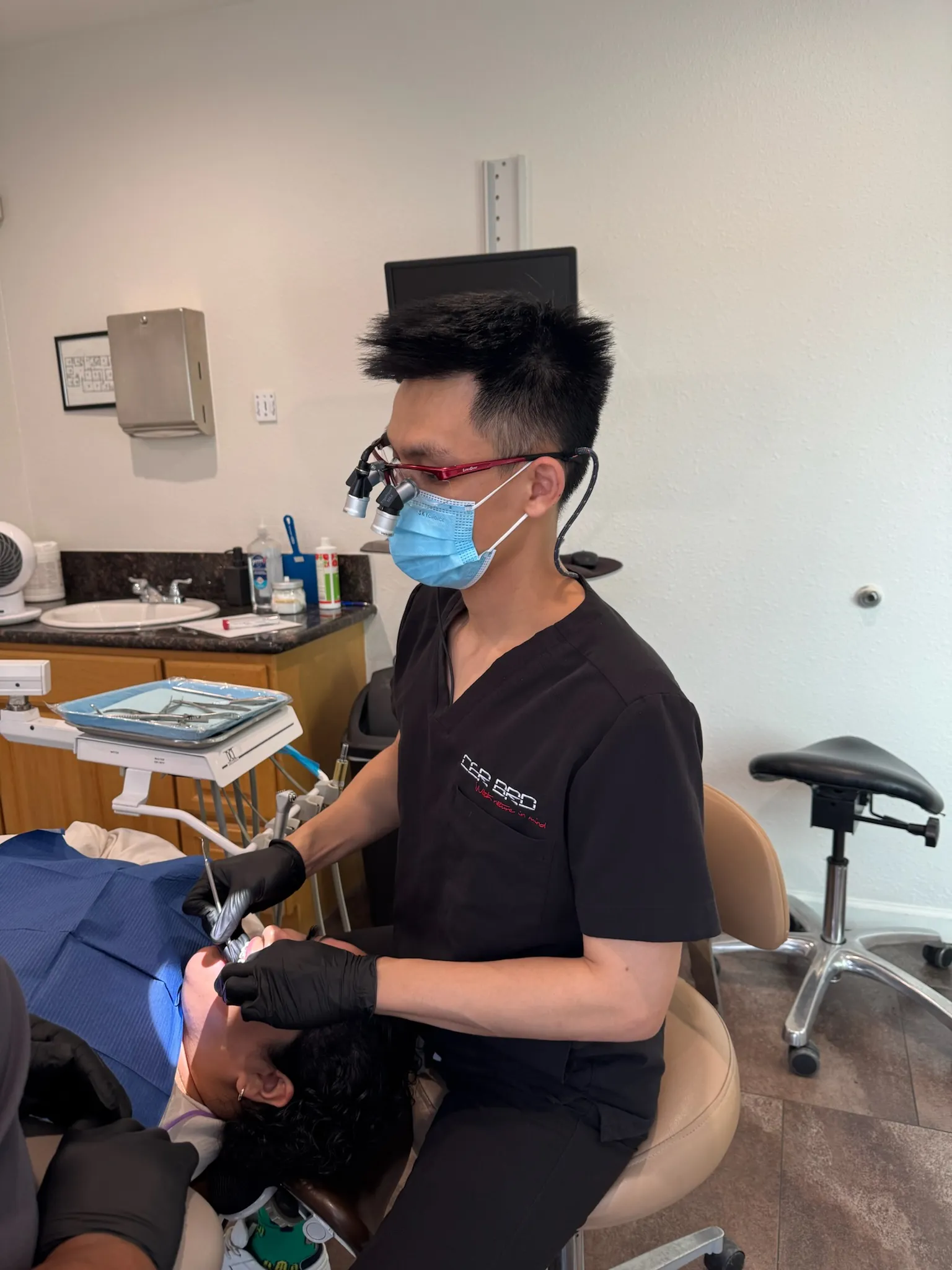
Planned and performed in one place.
Dr. Bradley is a UCLA-trained, surgically-proficient dentist who plans, places, and restores your treatment himself — so the dentist who knows your mouth is the one doing the work, start to finish.
Surgically trained dentist
Four UCLA degrees and a decade of education and training, plus advanced surgical and implant fellowships and a faculty appointment at the UCLA School of Dentistry.
Everything under one roof
Surgery, implants, and restorations handled in-house — no being referred across town.
Affordable, explained up front
Most major insurance accepted and monthly payment plans available, reviewed with you up front.
Trusted by Huntington Park families
“Dr. Bradley really cares for your teeth — his philosophy is to keep as much of the natural tooth as possible. He explained everything clearly, calmed my nerves, and did the procedure perfectly.”
“The best dentist in town. They really helped me with my fillings — completely pain-free — and made me feel at home through the whole process. Highly recommend.”
“My oral health has improved a lot with Dr. Bradley. He listens to my concerns and explains exactly what he’s doing and why — he even shows me the X-rays. He handles my cleanings and put on my adult braces himself, and the whole team is stellar.”
Frenectomy questions, answered.
Does a frenectomy hurt?
The area is fully numbed with local anesthesia, so the procedure itself is comfortable. Afterward there’s usually only mild soreness, easily managed with over-the-counter pain relievers.
Is it covered by insurance?
Many dental plans help cover a frenectomy, especially when it’s medically necessary, and we offer monthly payment plans. We review your options at your appointment — no surprises.
How do I care for my mouth afterward?
Gentle aftercare helps the area heal smoothly: keep the site clean, stick to soft foods for a day or two, and do any stretching exercises Dr. Bradley recommends.
What age is best for a frenectomy?
A frenectomy can be done safely at almost any age — from infants struggling to breastfeed to children, teens, and adults dealing with speech, spacing, or comfort issues.
Is a frenectomy done with a laser?
Many frenectomies today use techniques that allow a quick, precise release with minimal bleeding and a comfortable recovery. We’ll explain the approach that fits your case at your visit.
Reviewed by Dr. Bradley Salvatore, DDS · Updated July 1, 2026
Explore related care.
Oral Surgery
Most general offices send surgery out. Dr. Bradley trained specifically for it — so the dentist who knows your mouth is the one doing the work, and planning what comes next.
Explore →Tooth Extraction
A tooth extraction is a procedure where the dentist carefully removes a tooth from its socket in the jawbone. The area is fully numbed with local anesthetic so the experience stays comfortable. It becomes the right choice when other treatments can’t resolve the problem — usually severe decay, advanced gum disease, a tooth broken beyond repair, or crowding that affects your oral health.
Explore →Wisdom Teeth Removal
Wisdom teeth, also called third molars, are the last set of teeth to develop. Because the jaw often doesn’t have enough space for them, they can become impacted — stuck below the gum — which leads to pain, infection, and other problems. Removing them before they cause trouble helps you avoid future complications and keeps your smile healthy.
Explore →
Bothered by a tight tie? Let us take a look.
Most major insurance accepted · monthly payment plans available.
We’re closed right now — book online in seconds and we’ll confirm your appointment.