
A denture that
snaps in and stays in.
Tired of dentures that slip and slide? Implant-supported dentures — also called snap-in dentures — clip onto a few dental implants for the stability you’ve been missing, so you can smile, eat, and laugh with ease. Designed and placed by Dr. Bradley, a UCLA-trained, surgically-proficient dentist.
- UCLA-trained dental surgeon
- Implants placed & restored in-house
- Most insurance accepted
- Monthly payment plans
- Se habla español
- Award-winning · West LA Dental Society
A secure alternative to loose dentures.
Implant-supported dentures — also known as snap-in dentures — are a modern alternative to traditional removable dentures. Instead of resting on your gums, they snap onto dental implants set in the jawbone for a far more secure fit. You can still take them out to clean, but they stay firmly in place through everyday eating and talking.
What snap-in dentures do for you.
Enhanced stability
Say goodbye to slipping and sliding — your denture snaps onto implants and stays put.
Eat and speak with confidence
Enjoy a wider variety of foods and speak clearly, without worrying about your denture moving.
Bone preservation
The implants stimulate the jawbone the way natural roots do, helping prevent the bone loss that follows missing teeth.
You may be a good candidate if…
Loose, unstable dentures
You’re frustrated with traditional dentures that slip and slide.
Multiple missing teeth
You’ve lost several teeth but are in good overall health.
Enough bone for implants
You have sufficient bone density to support dental implants — and if not, we’ll talk through your options.
You want a longer-lasting fix
You’d prefer a more permanent, stable solution than removable dentures.
Your path to a secure smile.
Consultation & planning
We assess your oral health, take advanced 3D imaging, and map out a customized plan for your implants and dentures.
Implant placement
Dr. Bradley gently places the dental implants in your jawbone to anchor the new denture.
Healing & integration
Over a few months the implants fuse with your bone (osseointegration), forming a stable foundation.
Snap in your new teeth
Your custom dentures are crafted to fit your implants and face, then attached and adjusted for comfort and function.
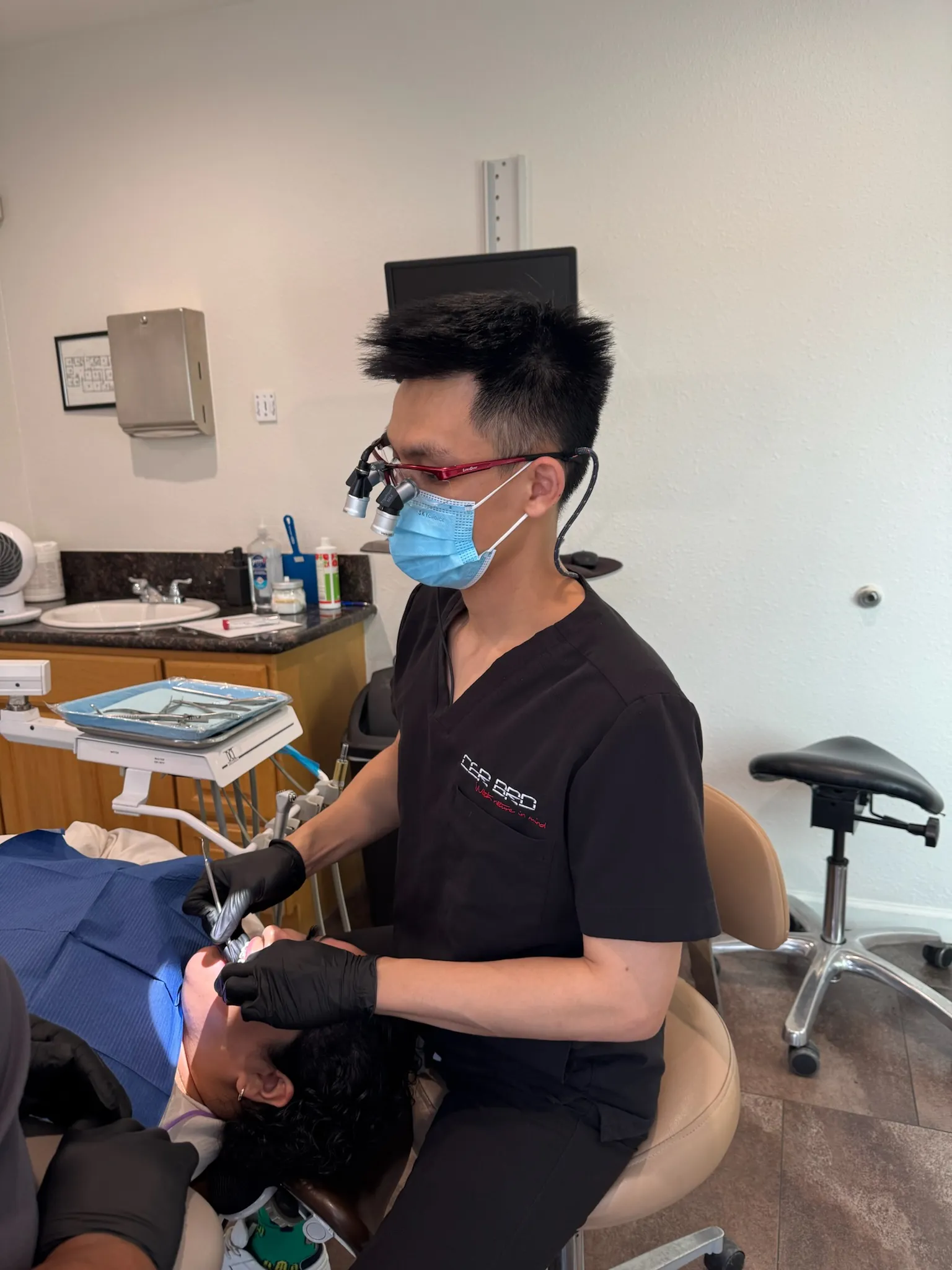
Planned and performed in one place.
Dr. Bradley is a UCLA-trained, surgically-proficient dentist who plans, places, and restores your treatment himself — so the dentist who knows your mouth is the one doing the work, start to finish.
Surgically trained dentist
Four UCLA degrees and a decade of education and training, plus advanced surgical and implant fellowships and a faculty appointment at the UCLA School of Dentistry.
Everything under one roof
Surgery, implants, and restorations handled in-house — no being referred across town.
Affordable, explained up front
Most major insurance accepted and monthly payment plans available, reviewed with you up front.
Trusted by Huntington Park families
“Dr. Bradley really cares for your teeth — his philosophy is to keep as much of the natural tooth as possible. He explained everything clearly, calmed my nerves, and did the procedure perfectly.”
“The best dentist in town. They really helped me with my fillings — completely pain-free — and made me feel at home through the whole process. Highly recommend.”
“My oral health has improved a lot with Dr. Bradley. He listens to my concerns and explains exactly what he’s doing and why — he even shows me the X-rays. He handles my cleanings and put on my adult braces himself, and the whole team is stellar.”
Implant-denture questions, answered.
Are implant-supported dentures affordable?
We keep the money side simple and stress-free. Most major dental insurance is accepted and monthly payment plans are available — we review every option with you at your free consultation, with no surprises.
How long do they last?
With good daily cleaning and regular checkups, implant-supported dentures last many years, and the implants themselves can last a lifetime.
How many implants will I need?
Most implant-supported dentures rest on two to six implants per arch. The lower jaw often needs as few as two, while the upper jaw usually needs more for a secure fit. Dr. Bradley uses 3D imaging to determine the right number for you.
How do I clean them?
Cleaning is simple — you take the denture out for a thorough daily clean while brushing around the implants like natural teeth. We’ll show you an easy routine and check the fit at your regular visits.
How is this different from regular dentures?
Traditional dentures rest on the gums and rely on suction or adhesive, while implant-supported dentures anchor to implants for a stable, slip-free fit that also helps preserve the jawbone. We’ll compare both with you and recommend what suits you best.
Reviewed by Dr. Bradley Salvatore, DDS · Updated July 1, 2026
Explore related care.
Dental Implants
Lose a tooth and the ones around it shift, and the jawbone slowly shrinks. An implant stops that — it replaces the whole tooth, root and all, so your bite stays strong and your face keeps its shape.
Explore →All-on-X
If you’ve lost most of your teeth — or you’re tired of a denture that moves — All-on-X gives you back a complete set that stays in. You bite, laugh, and eat the way you would with natural teeth.
Explore →Single-Tooth Implant
A single-tooth implant is a lasting way to fill the gap left by a missing tooth. A titanium post is placed into your jawbone, where it fuses with the bone over time — creating a strong foundation for a crown that blends in with the rest of your smile. The result looks, feels, and works just like a natural tooth.
Explore →
Ready for dentures that stay put?
Most major insurance accepted · monthly payment plans available.
We’re closed right now — book online in seconds and we’ll confirm your appointment.